
| How I Score an Abrasion Testing Machine Manufacturers AI Search Performance in my AI Business Understanding Report | |
| Does AI understand what your business is? | 20 Points |
| Does AI understand what you actually sell or provide? | 20 Points |
| Does AI understand who your business is for? | 15 Points |
| Does AI understand what makes your business different? | 15 Points |
| Does AI know when your business belongs in the conversation? | 15 Points |
| What does AI have wrong, missing, or confused? | 10 Points |
| Do ChatGPT, Claude, and Gemini understand your business the same way? | 5 Points |
| Total points available 100 points | |
AI Search Report for Abrasion Testing Machine Manufacturers
An abrasion testing machine manufacturer sells equipment where the exact test method, specimen, motion, load, abrasive medium, applicable standard, and material being evaluated can determine whether a machine is appropriate for a laboratory at all.
That makes the way ChatGPT, Claude, and Gemini understand the manufacturer unusually important.
A company can manufacture legitimate abrasion testing equipment and still be represented too broadly by AI as simply a maker of “materials testing equipment.” At the other extreme, an AI system might associate the company primarily with one familiar abrasion method while overlooking other instruments, materials, standards, or applications it actually supports.
The Frank Masotti AI Business Understanding Report shows what ChatGPT, Claude, and Gemini currently understand about an individual company, where their descriptions differ, and what important information they may be getting wrong or leaving out.
What Does AI Understand About Your Abrasion Testing Machine Manufacturing Business?
For an abrasion testing machine manufacturer, knowing the company name is not enough.
AI needs to understand what kinds of abrasion testing equipment the company manufactures and the testing environments those machines are intended to support.
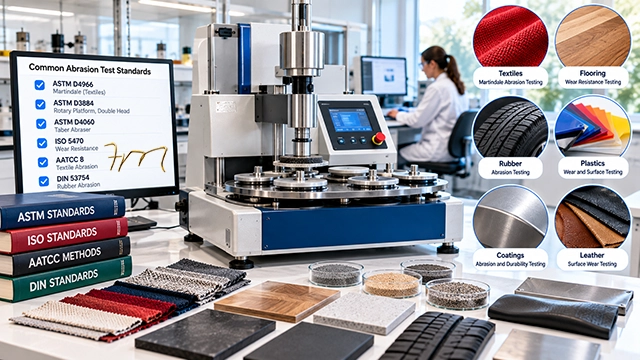
Abrasion testing is not a single procedure. ASTM itself notes that there are many different abrasion testing machines, abradants, test conditions, procedures, and methods of evaluating results. ASTM D4966, for example, covers textile testing using a Martindale abrasion tester, while ASTM D3884 addresses the rotary platform, double head method.
That distinction creates an important AI understanding problem.
If someone asks an artificial intelligence search engine for manufacturers of equipment for a particular abrasion test, the useful answer is not simply a list of companies associated with the word “abrasion.”
The AI system needs enough information to connect the requirement to the correct manufacturer.
AI Search Report for Abrasion Testing Machine Manufacturers
An AI Search Report for an abrasion testing equipment company should examine whether AI understands the details that could determine whether that manufacturer belongs in a buyer’s consideration set.
Those details can include the types of abrasion testers manufactured, supported test methods, materials being evaluated, specimen requirements, available loads and operating parameters, consumables and accessories, laboratory applications, and the standards associated with particular machines.
This matters because abrasion testing itself can vary substantially. Test conditions such as the abradant, specimen tension, pressure between the specimen and abrasive surface, and changes to the abradant can affect the results.
A vague AI description can therefore hide exactly the information a laboratory, quality department, product developer, or testing organization needs to determine whether a manufacturer is relevant.
Does AI Know Which Abrasion Testing Methods You Support?
This is one of the biggest distinctions AI searches need to get right.
A manufacturer associated with rotary abrasion equipment is not automatically the right answer for someone looking for a Martindale tester. A company manufacturing equipment for textile abrasion testing may not serve the same testing requirements as a manufacturer focused on coatings, plastics, rubber, flooring, automotive materials, or other applications.
The equipment category alone does not establish the fit.
ChatGPT might correctly associate a manufacturer with abrasion testing but fail to identify the particular methods its machines support. Claude might recognize a specific instrument family. Gemini might describe the company under a broader materials testing category.
All three answers can sound plausible while giving a potential buyer materially different pictures of the same manufacturer.
That is why comparing multiple AI models matters. One AI answer cannot tell you whether the understanding is consistent across the systems people are actually using.
Does AI Connect Your Machines With the Right Standards?
Standards are particularly important in this industry because buyers frequently begin with a testing requirement rather than a manufacturer’s name.
A laboratory may be looking for equipment appropriate for a particular ASTM, ISO, AATCC, DIN, or other recognized test method.
The question can effectively become:
Who manufactures equipment for the test we need to perform?
If an AI system understands that a company manufactures abrasion testers but does not connect those machines with the relevant standards, the company can disappear from that conversation.
The reverse can also cause problems.
AI could associate a manufacturer with a standard that applies to a different instrument, test configuration, material, or procedure.
For a technical equipment manufacturer, being approximately correct is not always useful. The relationship between the machine, method, material, and standard needs to make sense.
Does AI Understand the Materials Your Equipment Tests?
“Abrasion testing machine” describes a broad equipment category.
The material being tested provides another layer of meaning.
Depending on the manufacturer’s product line, applications could involve textiles, coatings, plastics, rubber, leather, flooring materials, automotive components, industrial materials, or other products where abrasion resistance needs to be evaluated.
ASTM’s guidance illustrates why this distinction matters. Laboratory abrasion results depend on the method and conditions used, and laboratory abrasion resistance should not automatically be treated as a direct prediction of actual service life.
For a manufacturer, that means AI needs more than a generic association with “durability testing.”
It needs to understand where the equipment actually fits.
If your company specializes in particular materials or applications and AI leaves those specialties out, a technically accurate but incomplete description can still put the company outside the conversation when a buyer asks a more specific question.
Can AI Distinguish the Machine From the Test?
There is another subtle problem in this industry.
The manufacturer builds the instrument. The instrument performs a particular laboratory procedure. The resulting measurement describes the specimen under defined test conditions.
Those are three different things.
An AI system that blurs them together can produce misleading descriptions of what the equipment does or what its results mean.
ASTM specifically cautions that abrasion resistance measured in laboratory equipment is only one factor related to actual wear performance or durability.
That distinction matters to a manufacturer whose reputation depends on technical accuracy.
An abrasion tester does not magically determine the universal durability of a product. It produces results according to a defined procedure.
A strong AI understanding of the manufacturer should preserve that distinction rather than reducing sophisticated laboratory equipment to a generic “durability testing machine.”
What Happens When a Buyer Asks AI for a Manufacturer?
The important AI question changes when the company name is removed.
Instead of asking:
What does ABC Testing Equipment manufacture?
a prospective buyer might ask:
Who manufactures abrasion testing equipment for this material?
Which companies make machines for this ASTM test?
Who makes laboratory abrasion testers for coatings?
What manufacturers should I compare for a Martindale abrasion tester?
Those are recommendation and discovery questions.
AI has to connect what it understands about manufacturers with the technical requirements contained in the question.
A company can therefore be recognized perfectly when someone asks about it by name and still be absent when someone asks AI to identify appropriate suppliers.
That difference between recognition and selection is why simply asking ChatGPT about your own company does not provide a complete picture. The question is whether AI understands enough about the manufacturer to connect it to the appropriate buying situation and potentially include it on an AI generated shortlist.
What Could an Abrasion Testing Machine Manufacturer Learn?
A manual analysis across ChatGPT, Claude, and Gemini could uncover very different issues depending on the manufacturer.
One model might understand the core product category but omit an important family of instruments.
Another might associate the company strongly with textile testing when its equipment serves several industries.
A model could recognize the machines but fail to connect them with relevant standards.
AI might understand the company’s testing applications but have an incomplete picture of accessories, consumables, replacement components, or related equipment.
There could also be no major problem at all.
All three systems might understand the company accurately and consistently.
That is useful information too.
The purpose of the analysis is not to manufacture a problem. It is to find out what the models actually understand.
A Technical Manufacturer Should Not Have to Guess What AI Thinks It Makes
Abrasion testing equipment is too specialized for a generic company description to tell the whole story.
The meaningful questions involve methods, materials, standards, applications, instrument types, and the testing requirements that cause someone to search for a manufacturer in the first place.
The Frank Masotti AI Business Understanding Report manually evaluates your company across ChatGPT, Claude, and Gemini and compares what the three systems understand.
The report costs $495 as a one time purchase. You receive a 10+ page PDF documenting the models’ understanding, misunderstandings, omissions, associated attributes, recognition and recommendation visibility, agreements and disagreements, strategic observations, and recommendations based on the findings. The analysis is performed manually and the completed report is delivered the next business day after analysis is completed.
The unanswered question is simple:
Do ChatGPT, Claude, and Gemini understand what your abrasion testing machine manufacturing company actually makes, which testing requirements it serves, and when it belongs in a customer’s search for equipment?
You can order the Frank Masotti AI Business Understanding Report for $495 and find out.